
How to make data-driven decisions
A dashboard on the office TV is not a data culture. What sets data-driven companies apart is having the exact number in the meeting where the decision is made, and knowing what to do when it moves.
Making data-driven decisions is less about having data and more about knowing what to do with it. Data is the new gold, and companies use a fraction of what they collect. The reason is not a lack of tools: becoming a data-driven company takes methodology, process and people, and almost all of them start with the software. They buy the tool, then think about the process, then remember the people. The result is an infrastructure that piles up data and a month-end meeting where nobody knows where to start.
This text goes with the conversation above, on PragmaTalk, which is in Portuguese. If you have data stored, you are already ahead of those who do not, and the problem becomes a different one.
Three myths, in the order I run into them
“Data-driven companies are tech startups.” They are not. A company is a set of departments, and finance, accounting, HR, sales and marketing each have their own culture and technology. A company with an analytics stack tends to get there faster because it is born with information systems, but the pharmaceutical industry decides on data by nature, because the subject is health. Medicine is the cleanest example there is: the doctor looks at your diagnosis and decides from it.
“We are data-driven, we have a dashboard on the office TV.” Buying Power BI, putting up a dashboard and staring at the screen all day is not a data culture. The question that reveals it is simple: if the needle moves a little to the right, what do you do? And if it moves back to the left? Data culture is knowing what to do with the number, not having access to it.
“Being 100% data-driven.” It does not exist and it is not worth chasing. What is worth it is having the exact data in the meeting where the decision happens.
The difference shows up in the daily meeting
Sales teams usually have a daily meeting, and it is good practice. The question is what gets discussed in it.
In the operations I followed before restructuring them, the conversation was about who performed best, which customer was the hardest, which one was the least annoying. That is good for team bonding and supports no decision at all. There was no organized metric and no clarity on where to look.
A data-driven decision is a habit, in the literal sense. The same way you get organized before leaving home for an appointment, before the meeting you look at the data and know which metric you need to check to decide what is on the table.
The case of the missed target
This is the example that comes up most, and it shows the difference in practice.
The target was missed. Why? Without data, the sales director questions the team bringing judgment and bias to the situation. Is it the salesperson? The product? The market? Each person in the room answers from their own intuition, and when twelve directors decide on intuition there is no criterion to say whose experience is worth more.
With data, the question has a verifiable answer, which is the principle behind the whole Revenue Operations methodology. You open the CRM, look at the loss reasons and objection reasons the salespeople logged, and see which one prevailed. Often we think it is the salesperson, often we think it is the product, and the record shows something else.
That, of course, depends on the loss reason being filled in with a closed option, which is the subject of how to turn your CRM into a demand machine.
Which data to collect, and in which order
The classic mistake is to start by collecting. There is too much data, and the danger here is never scarcity: you open the spreadsheet, open the database, see the amount of stuff and close it out of fear to go do something else.
The order that works is the reverse. Start with what you need to decide in your job and what you need to monitor. With that drawn out, map the touchpoints of the journey. With the touchpoints, you know which metrics you need. Only then go and find where each metric lives.
An example of the full path: the contact fills out the form on the website, the data lands in the marketing automation tool and Marketing Cloud is where it will be used. I know where it was collected, which system it went to and where I will use it. Without that drawing, you collect a lot and collect nothing useful.
In marketing, the set of metrics is usually the journey: whether the person opened the email, opened the push notification, clicked, is engaged. Each team draws its own, because the information that matters for credit is not the one that matters for retention.
The 4 revenue metrics that matter
If the question is where to start, these four support most revenue decisions, and all of them come out of a well-filled CRM.
None of them is exotic. What is almost always missing is clean data behind them.
The risk of dirty data in the CRM
Each metric above depends on one type of record, and each type of dirt knocks one of them down without warning.
Duplicate contacts inflate the base and distort conversion, because the same lead counts twice coming in and once going out. Deals with an expired close date that are still open fatten the pipeline and make the cycle time look better than it is. Free-text loss reasons make it impossible to read why the sale did not happen. A blank lead source turns CAC by channel into an estimate.
The effect is worse than having no number: the meeting starts deciding with conviction on wrong data. That is why cleanup comes in as a rule at the moment of entry, with mandatory fields, closed options and someone responsible for upkeep, which is what I call data governance in how to turn your CRM into a demand machine.
Data protection: company data and personal data are different games
In business-to-business relationships there is more flexibility, because much of what matters is public data: estimated revenue, number of employees, headcount on LinkedIn, company structure. That is what account strategies are built on.
With personal data the story changes. Under Brazil’s data protection law, the LGPD, you can only use what the person shared with consent, which is why every website has a cookie banner and why there is explicit consent when you apply for a loan and the bank checks your history.
And here is a criticism I make often, because I work with a lot of fintechs. They have a world of information about the customer and keep offering the same thing: credit at x percent a month. If the data shows that this person is planning a family trip to celebrate their child’s birthday, why not make the offer around the desire? You sell more than credit, with less friction.
Having the data and not using it is worse than not having it, because it costs the same and returns nothing.
Why the customer became the center
The pizza story explains the shift better than any chart.
Fifteen years ago, ordering pizza meant going to the fridge, finding the magnet, calling, asking for the menu over the phone, agreeing on payment and waiting two or three hours without knowing anything.
Today you pick up your phone, see the whole menu, know the delivery time, track it in real time and, if it is late, complain and leave a review. The pizzeria sends a voucher. And if you did not like it, you pick another one tomorrow.
Behavior changed, and with it the power of decision moved into the customer’s hands. That shift is what made companies truly value the customer and adopt the philosophy of putting them at the center of the operation. The most important person in the company is not the CEO: it is the customer, because every company is born to serve someone.
What to do on Monday
Pick a decision your team makes often and write down which metric should support it. Then check whether that metric exists, whether it is up to date and whether anyone looks at it before the meeting. One of the three is usually missing.
If the answer is that the collection process is missing, the way forward is to structure the operation, which is why the work starts with a Revenue Operations diagnosis: which decisions, which metrics, where each piece of data is born and who is responsible for it. If the data exists and nobody knows how to read it, it is training.
The challenge I leave you with is about your own daily meeting: if someone walked into it tomorrow and asked which number will change today’s decision, how many people in the room would give the same answer?
More writing on the same subject.
What a CRM is and what it is for
A CRM is not the tool where the salesperson logs the call. It is the infrastructure that connects the entire revenue cycle, and choosing the platform before understanding that is what makes implementations fail.
7 min readRead more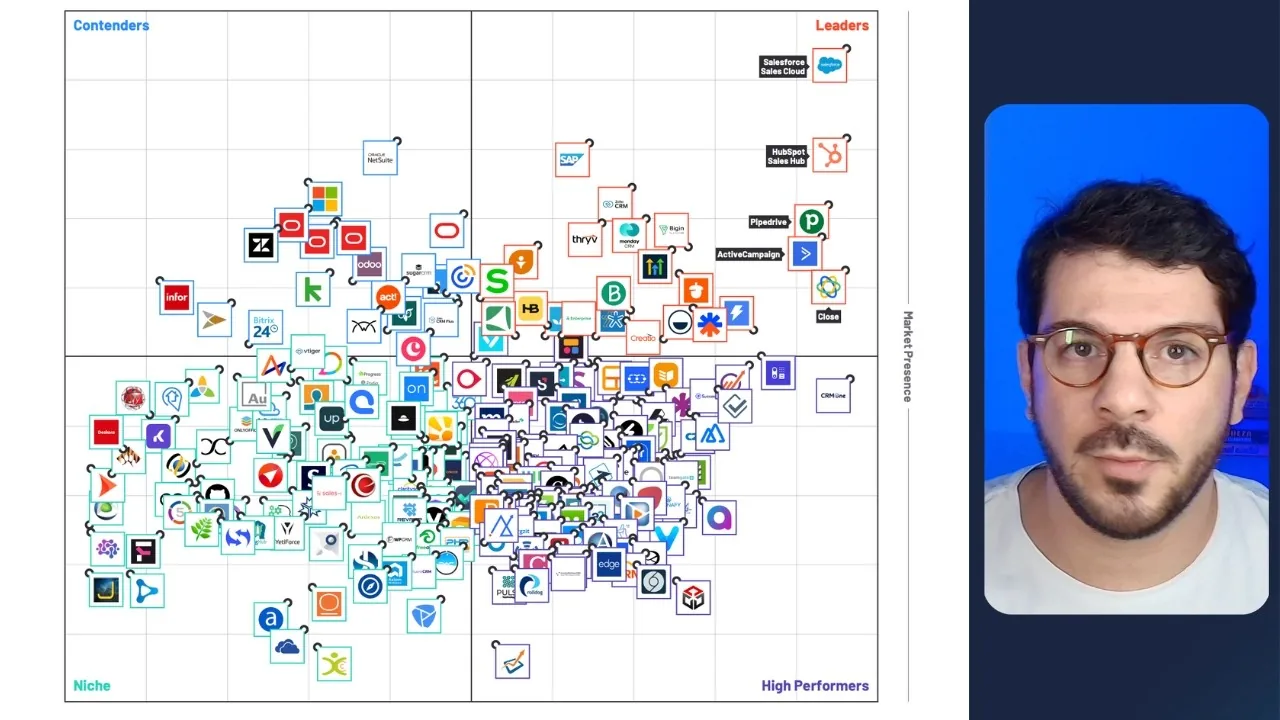
The best B2B CRMs in 2026
Eight out of ten Brazilian companies already use a CRM or are implementing one, and most of them still miss their targets. The list matters less than knowing how to read the two sources specialists use.
6 min readRead more
RevOps and CRM in B2B pipeline management
I once rode along with a sales rep who has forty years in the market, a very high income and a paper notebook as his CRM. The pattern behind operations with sustainable revenue is not technology, it is a relationship process.
8 min readRead more