
RevOps and CRM in B2B pipeline management
I once rode along with a sales rep who has forty years in the market, a very high income and a paper notebook as his CRM. The pattern behind operations with sustainable revenue is not technology, it is a relationship process.
Before talking about RevOps and B2B pipeline management, a story: I once rode along on a sales route with a rep from a pipes-and-fittings manufacturer who has forty years in the market, a very high monthly income and a paper notebook as his CRM. He knows customers by name, knows what each one needs and asks how the person is doing before offering anything. That worked for decades, and the reason was not the notebook.
This text goes with the conversation above, on RevenueCast, which is in Portuguese. The subject is what separates an operation with sustainable revenue from an operation with revenue spikes.
The pattern I find in operations that sustain revenue
In field visits, riding along with reps, serving banks, agribusiness, small companies and enterprise accounts, the pattern repeats. An operation that grows over months and holds up over years has one specific trait: a very well-defined process for the relationship between whoever sells and whoever buys.
It is not the software. The rep with the notebook had a process, he just did not have a tool, and his process lived in his head and his discipline. That difference between process and software is the subject of what a CRM is and what it is for. The limit shows up when the operation grows or when he leaves the company, because the process walks out with the notebook.
The same trait shows up in startups, with different vocabulary. The difference is that in a startup the process is usually written down, and with the rep it was lived.
The order: process, people, technology
The sequence that works is to define the process for handling the customer, train the teams in that process, and then bring in technology and innovation.
Technology and innovation alone, without process, sometimes work and sometimes do not. With process, the path lasts longer. It is a model that does not deliver results in the very short term, which is exactly why it gets passed over: whoever needs this month’s number buys a tool, because a tool gets installed in weeks and a process gets built in months.
That design is what became the four-phase method I use, and it was not a positioning choice. It is what was left after we got it wrong by bringing technology in as the savior.
Before and after: a pipeline designed by the buyer
The first place where a lack of process shows up is the list of pipeline stages. Almost every operation I take on has too many stages, and each extra stage is an internal task that became a phase, not a buyer decision.
The rule that comes out of this is simple to state and hard to follow: a deal only changes stage when the buyer does something. With four stages like these, the conversion rate between them starts telling you where the sale gets stuck, and a closed-option loss reason, which I explain in how to turn your CRM into a demand machine, tells you why. With nine stages of internal tasks, conversion measures how many times the salesperson clicked.
What RevOps is, from the teams’ point of view
Revenue Operations is the name given to the set of teams responsible for bringing in revenue, looked at as one system rather than as departments.
Marketing does acquisition and positioning, and positioning already defines the revenue structure: presenting the brand as an accessible ticket or a high ticket changes the entire pipeline that comes after. Sales builds relationships, sells, builds loyalty and plays the consultative role. Post-sale and customer success take care of the account, keep the score high and keep the customer in context.
These are three extremely technical and specialized structures. A paid media professional is very different from an SEO professional, who is very different from a salesperson, who is different from someone in customer success. A more aggressive salesperson, a more technical one, a more empathetic one: these are distinct skills and not interchangeable.
Historically, each team had its own goal and pointed the finger at the team next door. Sales said marketing’s leads were bad, marketing said the salespeople did not work properly. I hear that much less today than I used to, which is a good sign.
The argument that ends the discussion
For the customer, marketing, sales and post-sale are one single journey.
Whoever is negotiating with your company does not care about your internal teams, who answers for which target, or your handoff policy. What matters to that person is that the buying journey has as little friction as possible.
When the company looks at itself as a revenue operation instead of three departments, things unify on their own. Having a sales director, a marketing director and a post-sale director, each with their own target, is different from having one revenue director answering for all three.
The training gap in people who take on revenue
This point deserves more attention than it gets. I see heads of sales, heads of growth and CROs with excellent sales careers who get lost at the management step.
The reason is not ability. It is that nobody taught them the fundamentals of CRM, metrics and operations, and those three things are not learned by selling. Someone who spent their career closing deals developed a set of skills that does not include designing stage-to-stage conversion or diagnosing where the pipeline leaks.
It is a gap in repertoire, not in talent, and it can be fixed. It is the reason leadership training tends to pay off more than sales-technique training in an operation that already sells well.
On tools, with the disclaimer I owe you
I am the founder of a HubSpot Elite Partner, so read what follows with that discount.
I chose to work close to HubSpot for a functional reason: it serves services, SaaS and e-commerce well, and it serves complex sales especially well, which is where you need to collect a lot of information and see the whole cycle, from the newsletter sign-up to the NPS answered after renewal. And it does that from a starter plan up to enterprise, which lets the company grow without moving house.
And now the part a partner rarely says: HubSpot does not serve the whole market. That is not a flaw, it is a product trait. Whoever does everything does nothing, and every good product picks a pain to solve.
When the project is manufacturing with a sales-rep model, with reps in the field and a need for geolocation, Salesforce leads and that is what we work with. Recommending HubSpot there would be selling what I have instead of solving what the customer has. How to research tools without depending on a partner’s opinion is in the best B2B CRMs in 2026.
What to take away
If you lead revenue and want to know where the bottleneck is, do not start with the tool. Start by asking whether there is a written process for the customer relationship, and whether it survives the departure of the person running it today.
The rep with the notebook had an excellent process and no transferability. Many operations with an expensive CRM have the reverse: a transferable tool and no process at all. Both break, just at different moments.
The question I leave you with: if your best salesperson left tomorrow, how much of their relationship with the accounts would stay with the company?
If the answer made you uncomfortable, the work starts with the sales process and how the team runs the conversation, which is what I do in consultative selling and sales process training, built on your company’s own pipeline.
More writing on the same subject.
What a CRM is and what it is for
A CRM is not the tool where the salesperson logs the call. It is the infrastructure that connects the entire revenue cycle, and choosing the platform before understanding that is what makes implementations fail.
7 min readRead more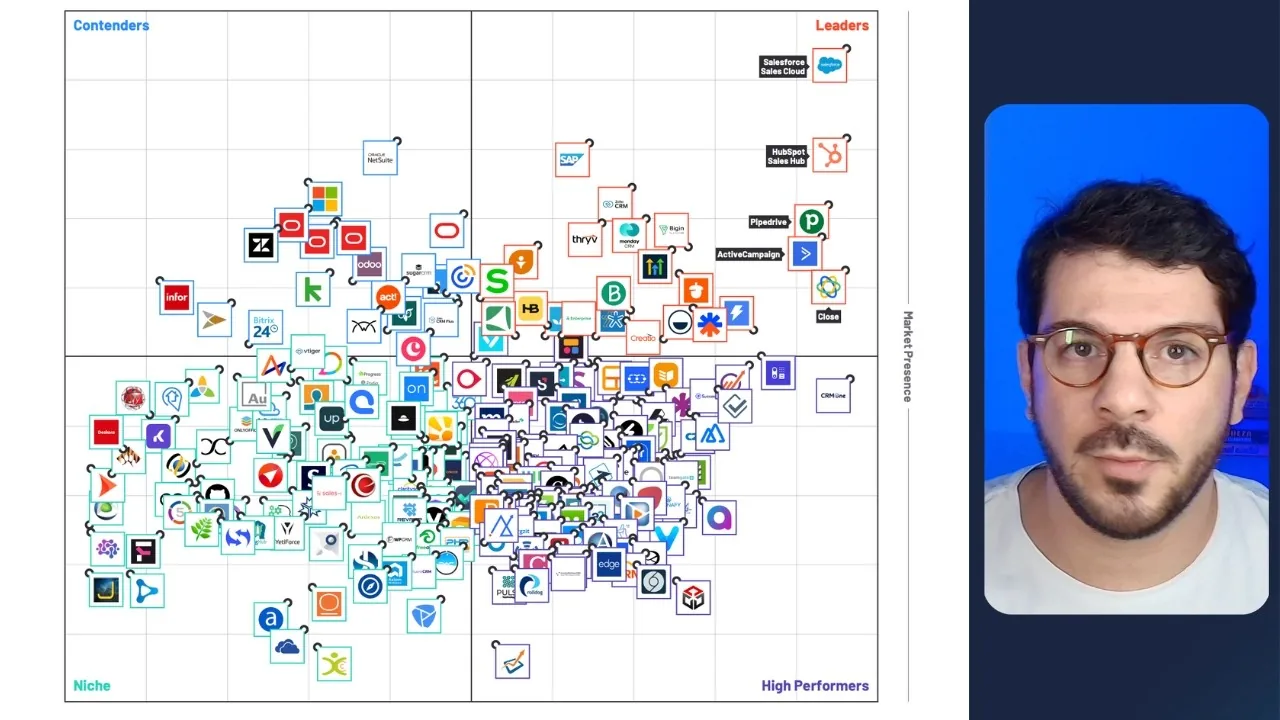
The best B2B CRMs in 2026
Eight out of ten Brazilian companies already use a CRM or are implementing one, and most of them still miss their targets. The list matters less than knowing how to read the two sources specialists use.
6 min readRead more
How to make data-driven decisions
A dashboard on the office TV is not a data culture. What sets data-driven companies apart is having the exact number in the meeting where the decision is made, and knowing what to do when it moves.
9 min readRead more