
How to use data to optimize B2B sales
The lead you spoke to today also spoke to three other companies this week and received a dozen emails. B2B sales is a battle for attention, and data is what decides who gets there first with the right message.
Using data to optimize B2B sales starts somewhere simpler than it seems. I often get prospecting emails that call me by my company’s name. The variable was wrong, someone grabbed a list and did not bother to qualify it, and the result is a message asking whether a company is doing well. It looks like a detail and it is not: B2B sales is a relationship between companies carried out by people, and people connect with people.
This text goes with the conversation above, on Snov.io Brasil, which is in Portuguese.
The obvious that needs saying
Inside your company there is someone who will reach out. Inside the company you want to serve there are personas, decision-makers and influencers. The connection that closes the deal happens between two people, not between two tax IDs.
And that is where the difference from B2C shows up. B2B sales is far more rational and far more complex, because it involves budget analysis, people influencing the decision and, often, a committee meeting to discuss your proposal.
In more than ninety percent of cases there is a second verification step. Even if you are talking to a sales director, they will need to validate; even if it is a manager, the contract signature goes through someone else. Whoever builds the process assuming an individual decision builds it for the rare case.
Why the process splits in three
One salesperson cannot do prospecting, consultative negotiation and implementation well at the same time. That is why the B2B sales process splits into pre-sales, sales and implementation.
Pre-sales can work on two fronts. Inbound, with an inside sales team handling the leads that come in through the website and campaigns. And outbound, with prospecting, cadence and follow-up, to generate the meeting the account executive will run. It is a complex, delicate and decisive area, because it generates demand and makes the first connection.
Sales goes deeper. It understands the pain, understands the context, does the consultative work, presents the proposal, leads the agreement and closes. The metric here is closing and revenue.
Implementation is sometimes part of the sales process and sometimes not, and each case has its specifics. My recommendation is that the implementation team takes part in the sales motion, and not to generate revenue: to help pre-sales and sales qualify better. Whoever will deliver knows how to spot early the customer who should never have come in.
The bill that arrives after a poorly qualified sale
If pre-sales does a poorly qualified job and pushes a deal forward, the celebration lasts until onboarding.
Everyone who provides services knows how it ends: a customer outside the ideal profile, recurring headaches, contract realignment halfway through, churn, and sometimes the decision to end the contract yourself. The sale that came in fast became a cost.
That is why the advice I give every SDR I coach is counterintuitive: more important than wanting to sell is understanding whether the person on the other side has a problem you solve, and whether you can really solve it.
The pre-sales routine is demanding. Many conversations in the same day, many calls, many emails. Passing along a contact you will not be able to help wastes the time of three teams and generates no result at all. That genuine will to help, and not the urge to hit quota, is what defines whether the area scales.
That does not mean giving up commercial sense. It means the filter comes first.
The battle for attention
Here is the point that reorganizes everything. The lead you talked to this morning also talked to other people in the market this week. They received a dozen emails, had calls with other consultancies, and are requesting proposals in parallel.
In other words, you are not competing on price or features in the first stage. You are competing for attention, and attention goes to whoever arrives with the most accurate message.
That is exactly where data comes in, and not as decoration for a report. Knowing which campaign the person came from, what content they consumed, which copy they clicked, how long they spent reading, what role they hold at that company: each of these points shortens the path to the right message.
Without that record, you write to an imaginary persona. The same base, well segmented, also generates demand among people who already know you. That is how the email that calls me by my company’s name was born.
What this requires from the CRM
None of this is possible if the information is not recorded at the point where it is produced, and that is an operations decision, not a tool decision. There needs to be a field, there needs to be a criterion for filling it in and there needs to be someone responsible for keeping it up to date, which is the same reasoning as what a CRM is and what it is for.
And there needs to be a handoff, which is the pain the Revenue Operations methodology exists to solve. A lead qualified by pre-sales that reaches sales without context forces the salesperson to spend the first fifteen minutes rediscovering what was already asked, which is irritating for the customer and expensive for the company.
AI in B2B sales: two prompts for the salesperson’s routine
Everything above depends on two things salespeople hate doing: logging the meeting after it ends and studying the account before it starts. That is exactly where artificial intelligence helps without taking the salesperson out of the conversation. The first prompt gives the CRM back the context that would otherwise be lost; the second uses the CRM’s context so the consultative sales meeting starts at the right point.
Two precautions. Use the business version of the tool, with training on your data turned off, and do not paste personal IDs, phone numbers or any personal data that does not need to be there. And read the summary before saving: AI gets people’s names wrong and invents deadlines with a confidence that a tired salesperson will not question.
What to do this week
Take the last twenty leads your pre-sales team passed to sales and answer two things: in how many did the salesperson have the source context before the first meeting, and how many closed. The correlation is usually stronger than expected.
Then take the customers who churned in the last twelve months and see how many already came in outside the profile. If most of them did, the problem is not in customer success, it is in qualification, and the solution is pre-sales training, not more retention effort.
The final challenge is about the battle for attention: what is the one piece of information you have about a lead that your competitor does not? If there is no answer, the dispute will end on price.
If you want to bring the two prompts and the rest of the AI routine to the whole team, using your own pipeline data, that is the training in AI applied to sales operations.
More writing on the same subject.
What a CRM is and what it is for
A CRM is not the tool where the salesperson logs the call. It is the infrastructure that connects the entire revenue cycle, and choosing the platform before understanding that is what makes implementations fail.
7 min readRead more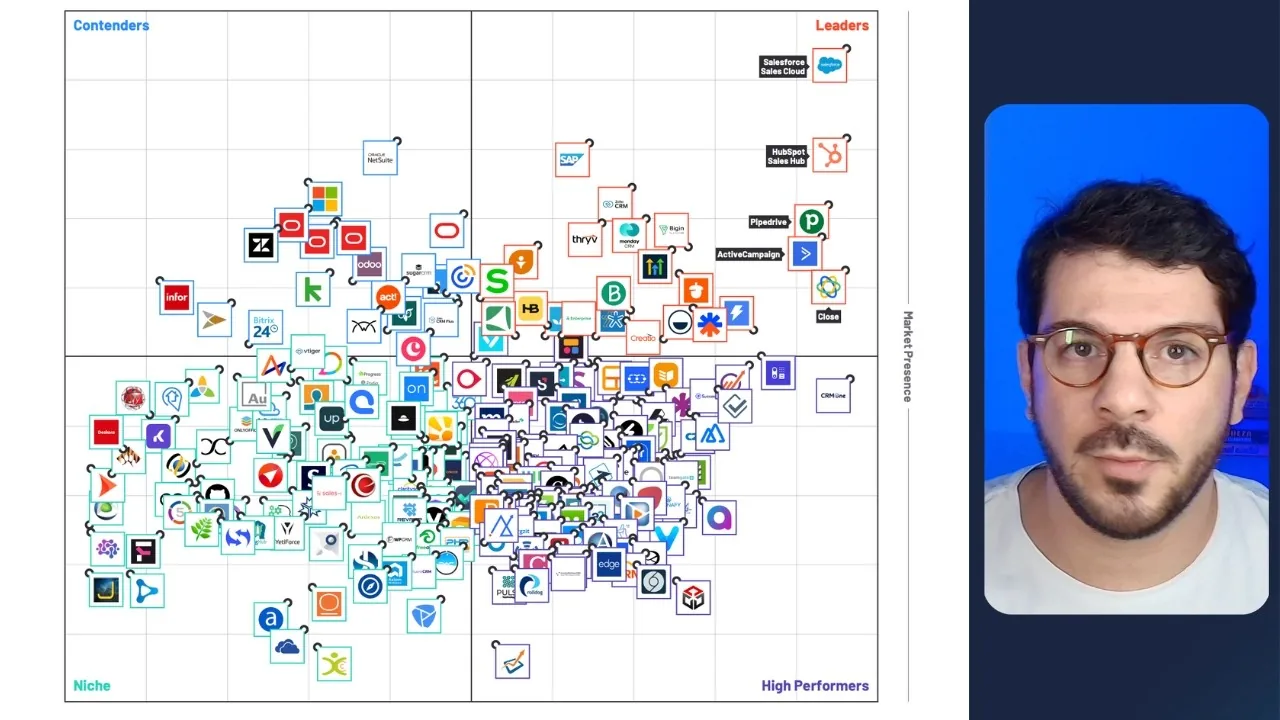
The best B2B CRMs in 2026
Eight out of ten Brazilian companies already use a CRM or are implementing one, and most of them still miss their targets. The list matters less than knowing how to read the two sources specialists use.
6 min readRead more
How to make data-driven decisions
A dashboard on the office TV is not a data culture. What sets data-driven companies apart is having the exact number in the meeting where the decision is made, and knowing what to do when it moves.
9 min readRead more